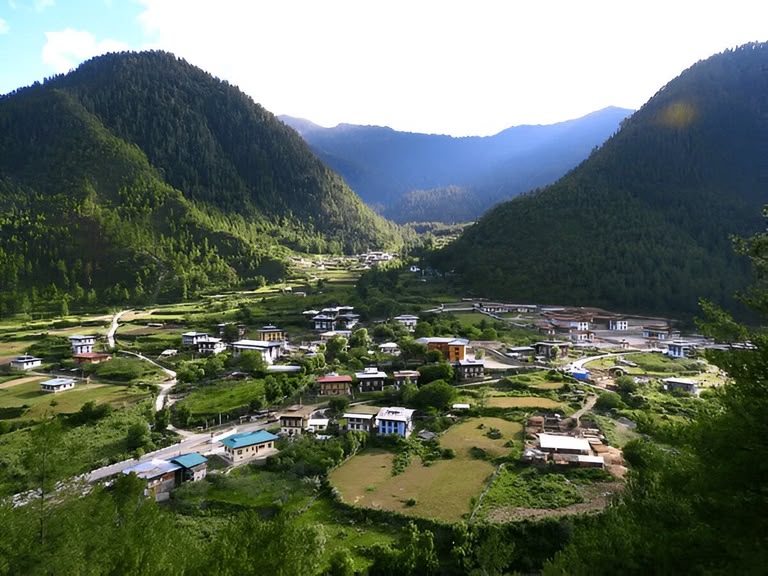
Tucked against the Tibetan border in western Bhutan, the Haa Valley remained closed to foreign visitors until 2002. Today it remains one of the kingdom's least-visited and most pristine destinations — a landscape of dense fir forests, yak pastures, and ancient white temples.
A Valley Apart
Haa sits at 2,670 metres and feels genuinely remote even by Bhutanese standards. The valley floor is dotted with traditional farmhouses, military outposts, and the twin temples of Lhakhang Karpo (White Temple) and Lhakhang Nagpo (Black Temple), both said to date back to the 7th century.
Haa is Bhutan before the tourists — raw, quiet, and completely itself.
— Pema Wangchuk, Nature GuideHiking in Haa
The valley offers superb trekking through fir and juniper forest with trails connecting to Paro over high mountain passes. The Haa Summer Festival in July is a wonderful opportunity to experience nomadic culture — yak butter tea, archery competitions, and traditional highland games.
Getting There
Haa is a 3-hour drive from Paro over the Chele La Pass (3,988m) — one of the highest motorable passes in Bhutan with breathtaking Himalayan panoramas. The road is paved but narrow; a local guide and vehicle are essential. Most visitors combine Haa with Paro on a 7–10 day itinerary.